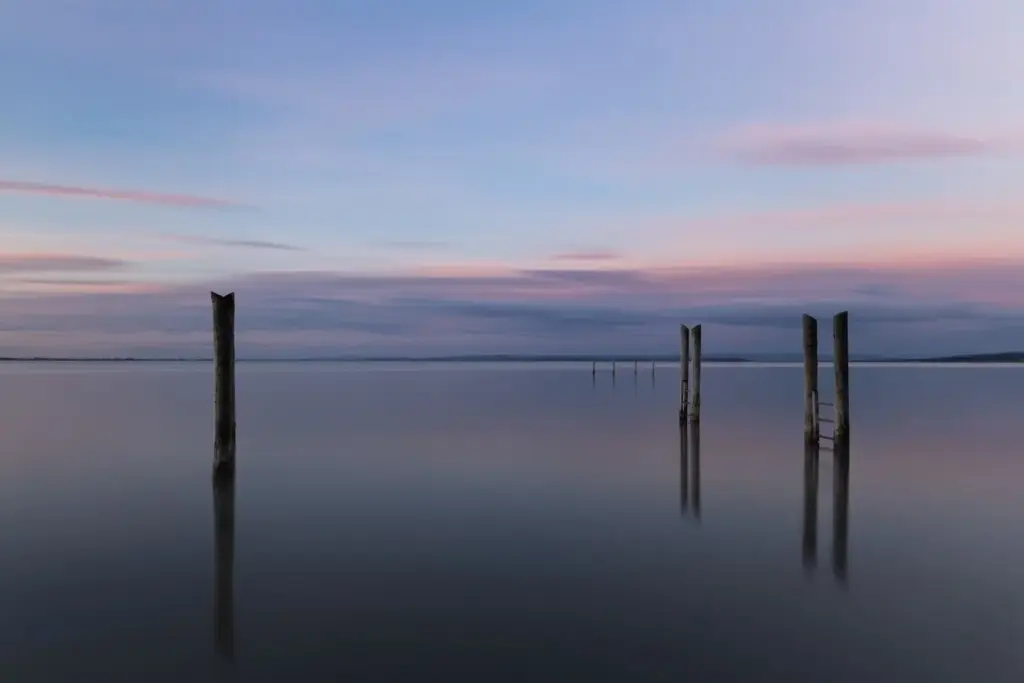
When Twilight Sculpts Silence

Step into Blue Hour Minimal Landscapes: Soft Gradients Shaping Negative Space, where edges loosen, colors cool, and the horizon exhale becomes audible. We’ll explore gentle transitions, intentional stillness, and the quiet discipline that helps a single line, a lone pier, or a distant light carry an entire story with grace, restraint, and luminous calm.

Reading Light at Day’s Edge

As daylight thins, the sky drifts toward cobalt and slate, and subtle gradients begin to whisper rather than shout. Minimal landscapes thrive here, because reduced elements let color shifts take center stage. Negative space becomes an active participant, shaping balance and mood. The fewer anchors you include, the more each one matters, inviting viewers to slow down, breathe, and notice silence gathering where brightness once rushed.

Color Temperature That Breathes

Blue hour cools the spectrum, often sliding between roughly 7000K and 10000K, letting shadows bloom with tender depth. Instead of chasing saturation, notice the breathing room between shades. The transition from deep blue to pearly cyan isn’t a backdrop; it is narrative. Let the sky carry the message while your composition simply listens, allowing tonal gentleness to cradle the scene without competing distractions.

Horizon Lines and Restraint

A horizon drawn with purpose clarifies everything. Drop it low to honor skyborne gradients, or lift it high to let minimal foreground tones sing. Resist unnecessary clutter; practice subtracting until calm arrives. A quiet jetty, a solitary dune, or a slim sandbar can anchor scale. With restraint, the horizon becomes a metronome for the eye, setting tempo while your palette hums softly in time.

The Whisper of Distant Detail

Tiny elements establish narrative scale inside generous emptiness. A single buoy gliding through muted water, or a lighthouse bead of light, transforms vastness into invitation. Don’t force importance; allow small details to echo across the negative space. Viewers lean in, filling the silence with memories. That whisper, sustained by delicate gradients, becomes a personal conversation rather than a broadcasted declaration.

Tools That Keep Quiet

Equipment should help the image step forward while keeping its own voice gentle. Clarity is welcome; cleverness is optional. Favor tools that honor gradients and preserve calm transitions. Stability matters more than speed, and accurate color matters more than quantity of features. When the gear disappears, the sky speaks. When noise is controlled, subtle tonal bridges emerge, and the smallest structures hold their ground without shouting.
Choose lenses that render clean microcontrast and gentle roll-off in the corners. A normal or short telephoto keeps distractions at bay, compressing distant elements into dignified silhouettes. Prime lenses reward discipline, while a restrained zoom encourages careful framing. Prioritize edge performance, flare handling, and neutral color transmission. You are curating gradations of blue, not chasing spectacle, so let optics honor the quiet.
Long exposures are lullabies for water and cloud, and lullabies demand steadiness. A sturdy tripod, well-seated feet, and a touch-free release safeguard softness without blur. Use a timer or cable to avoid tremor. Keep an eye on wind and surface vibration. Let seconds, sometimes minutes, do the smoothing, and watch forms simplify naturally as time tenderizes movement into patient, velvety tone.

Fieldcraft After Sunset

Preparation guides the quietest frames. Study tides, traffic patterns, and weather layers that might nudge color into unexpected subtleties. Arrive early, compose slowly, and wait for civil, then nautical blue to refine edges. Bring warmth for yourself and spare batteries for your camera. Embrace patience as a technique, listening for that precise minute when contrast relaxes and the entire shoreline exhales together.

Scouting Without Color

Visit locations in daylight and imagine the scene drained of intensity. Use your phone’s black-and-white preview to test how shapes survive when color quiets. Identify anchor elements that won’t vanish under dimness: a breakwater corner, a lighthouse stem, a channel marker. Mark your safe paths for returning in semi-darkness. When color falls away, structure holds the room, guiding how the gradients will settle.

Working With Wind, Water, And Time

Consider how a breeze pushes cloud strands and how swell lines fold toward shore. Ten to sixty seconds can polish the water to porcelain, while longer intervals turn moving clouds into silk ribbons. Balance the exposure so highlights still breathe. Each added second is another brushstroke smoothing chaos into shape. Trust repetition; the first exposure teaches, the third reveals, and the fifth finally sings.

Safety, Warmth, And Respect

Blue hour invites reverie, but caution keeps the experience whole. Wear reflective layers, carry a headlamp with warm and cool modes, and mind slick rock lips. Track tide return routes and frost risk on metal. Tread lightly around nesting zones and fragile shore plants. The calm you photograph belongs to more than you; leave every place cleaner, and tenderness will always welcome you back.

Gentle Gradients, Not Gradients Gone Wild

Use curves for feathered guidance rather than cliff-edge contrast. Work in layers with restrained masks that respect how the sky actually fell from cobalt toward steel. Avoid halos that fracture serenity along the horizon. Small HSL adjustments can separate sea from air without breaking continuity. If a slider offers drama, ask whether drama serves the hush, or merely performs over it.

Dodge, Burn, And Patience

Subtle dodging can brighten a pier tip or faint surf seam, while burning reins in stray glints that distract. Use large, soft brushes and build changes slowly. Walk away, return with rested eyes, and confirm balance. Minimal images depend on proportion. A little nudge re-centers attention; a push too far bends the entire atmosphere. Think gardener, not sculptor with a chisel.

Prints That Float

Choose papers that echo soft light: matte cotton rag for muted elegance, or baryta for delicate depth without sheen harshness. Keep borders generous so negative space breathes beyond the image edge. Frame simply, avoiding reflections that slice gradients. Calm invites close viewing; let materials feel quiet under fingertips. When the print floats, the room itself seems to settle into blue hour.

Stories From The Quiet Coast

Field notes shape practice as much as settings. A harbor can hold its voice while ferries sigh through long exposures, and a pebble bar can become an altar when the sky leans indigo. Recording small victories and missed chances teaches timing, reveals reliable angles, and proves that returning is often the most transformative technique any artist can cultivate with humility and joy.

Share The Calm

A Prompt For Your Next Walk

After sunset, find one uninterrupted line and follow it with your eyes for three quiet breaths. Compose around that line, removing anything that diminishes its patience. Make three exposures with different shutter lengths. Later, compare how time translated the same silence. Share your favorite rendition and why the chosen seconds felt truest to what your chest and the horizon were whispering.

Send A Frame, Join A Conversation

Post one image where a single shape holds the scene against a generous field of sky or water. Tell us the lens, the time, and one decision you wish you had reconsidered. Feedback will focus on preserving stillness, deepening gradients, and strengthening anchors without noise. Together, we can learn to listen more carefully to the spaces photographs often forget to honor.

Subscribe For Twilight Experiments

If you’d like ongoing notes about color management in low light, practical gear checklists, and monthly blue hour challenges, subscribe and stay close. Expect field-tested tips, printable check cards, and occasional live critiques. We’ll grow a library of patient methods that prioritize fidelity, kindness, and courage, keeping the sea of silence open for anyone willing to wade in.

Xarilumamiralorozera
Privacy Overview

This website uses cookies so that we can provide you with the best user experience possible. Cookie information is stored in your browser and performs functions such as recognising you when you return to our website and helping our team to understand which sections of the website you find most interesting and useful.